
What if the rhythmic, purposeful movements of a Swedish massage were actually the most effective way to reset a nervous system overwhelmed by the modern work week? Many professionals in Mississauga accept persistent shoulder tension and poor sleep as the inevitable cost of long hours at a desk. You might feel that your muscle knots require aggressive pressure to release, yet the true path to recovery often begins with calming the body’s internal stress response.
It is common to feel uncertain about which treatment best addresses your specific aches while seeking a professional environment that prioritizes your safety. This clinical guide explains how swedish massage therapy at our Meadowvale centre restores your physical balance and enhances your overall wellness journey. You will learn about the physiological mechanics of this foundational technique, its impact on your mental clarity, and how a structured treatment plan can lead to better sleep and lasting relief from chronic tension.
Key Takeaways
- Learn why swedish massage is considered the gold standard of therapeutic bodywork and how its five specific strokes target physiological recovery.
- Understand the clinical mechanics of rhythmic kneading and gliding strokes in flushing metabolic waste to improve your circulation and muscle health.
- Discover how to choose the right pressure for your specific needs by debunking common myths about the differences between Swedish and deep tissue techniques.
- Prepare for your visit to our Meadowvale centre by understanding the professional standards and assessment protocols of Ontario’s Registered Massage Therapists (RMTs).
- Explore how combining soft tissue therapy with Physiotherapy or Osteopathic Manual Therapy can accelerate your recovery from persistent injury and chronic pain.
What is Swedish Massage? Defining the Classic Therapeutic Approach
A Swedish massage is much more than a sequence of relaxing movements. It is a systematic therapeutic modality that serves as the foundation for Western massage therapy. When patients ask What is Swedish Massage?, they are often discovering a practice designed to manipulate the soft tissues of the body to achieve specific physiological outcomes. While many people associate it with relaxation, its primary clinical purpose is to enhance blood circulation and reduce muscular tension through a structured set of five traditional strokes.
Developed in the 19th century, this method has become the gold standard because of its logical approach to human anatomy. It isn’t just a collection of random touches; it’s a deliberate system of physiological manipulation. The term “Swedish” refers to the specific sequence and mechanical application of these strokes, which are designed to follow the direction of blood flow returning to the heart. This mechanical focus makes it an essential tool for both physical recovery and long-term maintenance.
The Core Philosophy of Swedish Therapy
The philosophy behind this practice is rooted in the concept of homeostasis. Our bodies constantly strive for internal balance, but chronic stress and physical strain frequently disrupt this state. Swedish massage focuses on the whole person by addressing the nervous system alongside the muscular system. By calming the “fight or flight” response, the treatment allows the body to begin its natural healing processes. This gentle yet effective approach makes it the ideal entry point for individuals who are new to therapeutic bodywork. It provides a safe environment to explore how professional touch can restore physical harmony.
Swedish Massage vs. General Relaxation Massage
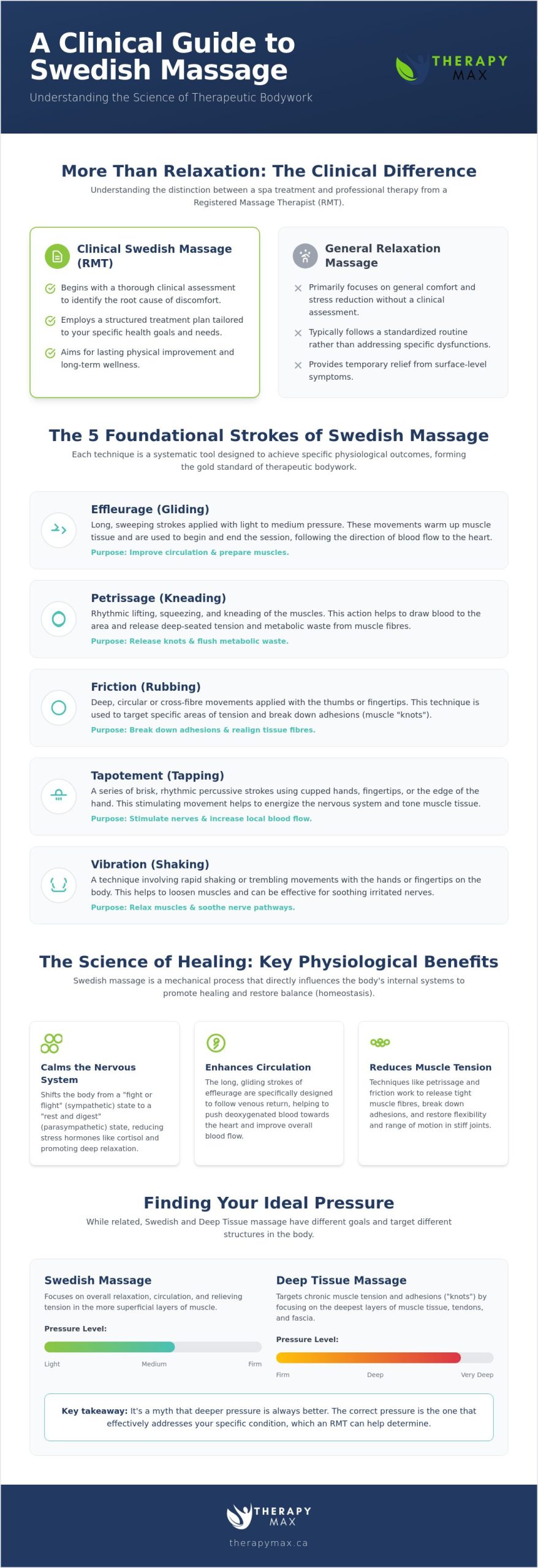
In Ontario, the distinction between a “spa” treatment and clinical therapy lies in the expertise of a Registered Massage Therapist (RMT). Every session at a professional clinic begins with a thorough clinical assessment. An RMT evaluates your range of motion and identifies the root cause of your discomfort rather than just treating surface symptoms. This assessment-based approach ensures that the pressure and techniques used are tailored to your specific health goals. While a general relaxation massage might provide temporary comfort, a clinical swedish massage provides a structured path toward long-term physical improvement. This combination of technical precision and patient-centred care defines the “nurturing expert” approach that patients deserve.
To understand the clinical value, we look at the mechanics of the five foundational strokes:
- Effleurage: Long, gliding strokes that warm the tissue and improve circulation.
- Petrissage: Kneading movements that lift and squeeze muscles to release deep-seated tension.
- Friction: Circular or cross-fibre pressure used to break down adhesions or “knots.”
- Tapotement: Rhythmic tapping that stimulates the nervous system and muscle fibres.
- Vibration: Rapid shaking movements that help muscles relax and release.
The Science of the Stroke: How Swedish Massage Heals the Body
The effectiveness of a swedish massage lies in its ability to manipulate the body’s internal systems through precise mechanical action. It isn’t merely a series of pleasant movements. Each stroke serves a specific physiological purpose. When a therapist applies long, gliding pressure, they’re physically assisting the circulatory system. This process helps the body transition from a state of high alert into a restorative state. You can experience these physiological benefits by visiting our Mississauga wellness centre for a professional session.
One of the most significant health benefits of a Swedish massage is its impact on the nervous system. Modern life often keeps the body in a sympathetic state, commonly known as “fight or flight.” This state increases cortisol levels and muscle tension. Clinical massage therapy activates the parasympathetic nervous system, which is the body’s “rest and digest” mode. This shift slows the heart rate and encourages the muscles to release deep-seated tension. It creates a safe harbor for the body to repair itself at a cellular level.
The Five Classic Techniques Explained
The sequence of techniques is intentional. Practitioners begin with effleurage, which involves long, flowing strokes to warm the soft tissue and centre the patient. Once the tissue is prepared, they use petrissage. This rhythmic kneading and squeezing reaches deeper muscle layers to manually flush metabolic waste from the tissue. To stimulate the nervous system further, therapists may incorporate friction to address adhesions, tapotement for muscle activation, and vibration to soothe sensitive nerve endings. These varied movements ensure a comprehensive treatment that addresses both the physical and neurological aspects of pain.
Circulation and Lymphatic Support
Effleurage increases venous return to the heart by applying pressure in the direction of the venous valves. This mechanical assistance is vital for efficient blood flow. By moving fluid toward the heart, the massage also supports the lymphatic system, which is responsible for immune function and waste removal. Regular sessions help reduce swelling and improve the movement of lymph throughout the body. This increased oxygenation to the muscles speeds up recovery from daily fatigue and prevents the accumulation of metabolic byproducts that cause stiffness. The result is a body that feels lighter, more mobile, and better equipped to handle physical stress.
Swedish vs. Deep Tissue: Choosing the Right Pressure for Your Body
A common misconception exists that a swedish massage is strictly a light, surface-level treatment. While it is the foundation of relaxation, it can be performed with firm pressure depending on your clinical needs. The primary difference between Swedish and deep tissue work lies in the intent and the specific layers of tissue targeted. Swedish techniques focus on the superficial layers of muscle to improve circulation and ease general stiffness. This makes it the ideal choice for stress management and circulatory issues. In contrast, deep tissue massage is designed to address chronic injury, postural dysfunction, or localized adhesions, commonly known as knots.
Strategic recovery often begins with a session focused on Swedish massage techniques. By warming the muscles and calming the nervous system first, your body becomes more receptive to deeper work in future appointments. This prevents the “guarding” response where muscles tighten against intense pressure. When your body is relaxed, an RMT can access deeper layers more effectively and with less discomfort for you. Starting with a foundational approach ensures that your journey toward recovery is steady and sustainable.
Pressure Levels and Patient Comfort
Our Registered Massage Therapists (RMTs) prioritize your comfort by adjusting pressure based on your specific pain threshold. We often distinguish between “good pain” and “bad pain.” Good pain feels like a productive release of tension that you can breathe through comfortably. Bad pain causes you to hold your breath or flinch; this actually signals the nervous system to tighten the muscles further. It’s a myth that more pressure always leads to more healing. For a stressed nervous system, a moderate, consistent pressure is often more therapeutic than aggressive force.
Which Treatment Suits Your Lifestyle?
Your daily activities often dictate the type of care you need. Office workers frequently benefit from Swedish massage to combat “tech neck” and the persistent shoulder tension caused by prolonged sitting. The rhythmic strokes help flush metabolic waste and restore mobility to the upper back. Athletes or those with physically demanding jobs might require deep tissue or sports massage for targeted muscle recovery. However, many of our patients choose a hybrid approach. This allows the therapist to use Swedish strokes to warm the body before applying deeper pressure to specific problem areas. This customization ensures that your clinical session is both safe and effective.
What to Expect During Your Swedish Massage in Mississauga
Your first visit to our Meadowvale clinic begins before you even reach the treatment table. We start with a comprehensive intake form to understand your health history, current stress levels, and specific physical goals. This is followed by a clinical assessment where your practitioner evaluates your posture and range of motion. This structured approach ensures that your swedish massage is both safe and tailored to your unique physiology. It allows the therapist to identify the root cause of your tension rather than simply addressing surface symptoms.
In Ontario, the title of Registered Massage Therapist (RMT) is legally protected. This means your therapist has met rigorous educational requirements and adheres to the standards set by the College of Massage Therapists of Ontario (CMTO). These standards prioritize your safety, informed consent, and professional boundaries. You can book your swedish massage online today to experience this high level of regulated care in a professional environment.
The RMT Advantage and Insurance Coverage
Choosing an RMT ensures that your treatment is recognized by major Canadian insurance providers. At TherapyMax, we offer direct billing to simplify your experience and reduce out of pocket costs. Many health benefit plans reset at the end of the year; therefore, it is a practical choice to utilize your coverage for preventative maintenance. Regular therapy sessions help manage the cumulative effects of office work and stress before they develop into chronic conditions. Our team provides itemized receipts that meet all provincial requirements for insurance reimbursement.
Preparing for Your Session
Clear communication is the most important part of your preparation. You should wear comfortable clothing and feel free to discuss your pressure preferences with your therapist during the initial intake. Our rooms are designed to be a safe harbor, featuring calming music and optional aromatherapy to enhance the therapeutic environment. Professional draping techniques are used at all times to ensure your privacy and physical comfort. You remain in complete control of the treatment and can request adjustments to the technique or environment at any time.
After your session, you might feel a sense of profound relaxation or mental clarity. It is essential to drink plenty of water to help your body process the metabolic waste released during the treatment. Gentle movement, such as a short walk, helps maintain the improved circulation and muscle length achieved during the session. These small steps ensure that the restorative effects of your swedish massage last well beyond your time at the clinic. We recommend avoiding strenuous exercise for at least 24 hours to allow your tissues to settle and recover fully.
Integrated Recovery: Why TherapyMax is Your Centre for Healing
TherapyMax operates on the belief that recovery is most effective when it is collaborative. While many people view swedish massage as a standalone service, our clinic positions it as a vital component of a comprehensive health strategy. We don’t simply treat the area where you feel pain. Instead, our practitioners work together to identify the root cause of your physical dysfunction. By integrating soft tissue therapy with other clinical disciplines, we provide a structured path toward lasting physical harmony and improved quality of life.
Our Meadowvale location serves as a professional hub for those seeking a regulated medical environment. We prioritize technical precision alongside patient comfort. This ensures that every session contributes to your long-term wellness goals rather than providing only temporary relief. Whether you are recovering from a specific injury or managing the cumulative stress of a demanding career, our clinical approach provides the reliability you need.
The Multi-Disciplinary Approach
A swedish massage can significantly enhance the outcomes of other treatments like Physiotherapy. When your muscles are warmed and relaxed through rhythmic strokes, your body becomes more receptive to joint mobilizations and corrective exercises. This preparation allows your Physiotherapist to work more efficiently with your skeletal system. Massage also plays a crucial role in managing compensatory tension. For example, a chronic shoulder injury often causes the neck and upper back to overwork. By addressing these secondary strain patterns, we prevent new issues from developing during your recovery process.
The synergy between soft tissue work and Osteopathic Manual Therapy is equally beneficial. While Osteopathy focuses on the structural integrity of the body’s framework, massage ensures that the surrounding muscles support those adjustments. Having your RMT, Physiotherapist, and Osteopath in one Mississauga location allows for a seamless exchange of information regarding your progress. This collaborative model ensures that your health team is always aligned with your specific recovery needs.
Booking Your Path to Wellness
Many patients wait until they reach a state of “crisis” pain before seeking professional care. However, the most effective way to maintain physical balance is through regular preventative sessions. Maintenance treatments help identify minor imbalances before they become persistent muscle knots or chronic injuries. We encourage you to view your therapy as an investment in your long-term vitality. Our team is here to guide you through every stage of your journey, from the initial clinical assessment to your final recovery goals.
Scheduling your session is a straightforward process designed to respect your time. You can choose a time that fits your schedule and begin the intake process immediately. Taking this first step allows us to begin crafting a treatment plan that addresses your unique physiological needs. Book your Swedish massage at TherapyMax today and experience a clinical approach to relaxation and recovery.
Begin Your Path to Lasting Physical Harmony
A swedish massage is a foundational clinical tool that does more than provide temporary relief. It serves as a vital bridge between your current state of tension and a future of improved mobility and mental clarity. By focusing on the physiological mechanics of circulation and nervous system regulation, this therapy allows your body to enter a true state of recovery. Our Meadowvale centre provides a professional environment where Registered Massage Therapists (RMTs) work alongside Physiotherapists and Osteopaths to address the root causes of your pain.
We simplify your recovery process by offering direct billing to most major Canadian insurance providers. This ensures you can focus entirely on your healing journey without administrative stress. Whether you’re managing office-related stiffness or recovering from a sports injury, our integrated approach provides the technical precision and compassionate care you deserve. You don’t have to accept persistent muscle knots as a permanent part of your daily life.
Schedule Your RMT Swedish Massage in Mississauga today. We look forward to helping you restore your physical balance and vitality.
Frequently Asked Questions
Is Swedish massage covered by my extended health insurance in Ontario?
Yes, most extended health insurance plans in Ontario cover swedish massage when it is performed by a Registered Massage Therapist (RMT). Because our practitioners are regulated by the College of Massage Therapists of Ontario (CMTO), your sessions qualify for reimbursement under most workplace benefit programmes. We recommend reviewing your specific policy to determine your annual coverage limits and whether your provider requires a physician’s referral.
How much clothing do I need to remove for a Swedish massage?
You should remove only as much clothing as you feel comfortable with for your treatment. Most patients undress to their undergarments to allow the therapist to apply oils or lotions directly to the skin, but you may remain fully clothed if you prefer. Our therapists use professional draping techniques with sheets and blankets to ensure that only the specific area being treated is ever uncovered, maintaining your privacy and warmth.
Will I be sore after a Swedish massage session?
It is common to experience mild muscle tenderness for 24 to 48 hours after a session, similar to the feeling after a light workout. This sensation occurs as your body processes metabolic waste and adjusts to the manual manipulation of soft tissues. Drinking plenty of water and engaging in gentle movement after your appointment can help minimize this sensation and support the body’s natural recovery process.
Can I get a Swedish massage if I am pregnant?
Yes, you can safely receive a swedish massage while pregnant, provided you aren’t experiencing high-risk complications. We offer specialized prenatal massage that utilizes specific positioning and supportive cushions to ensure the safety and comfort of both you and your baby. This treatment is an excellent way to manage the lower back pain, joint swelling, and sleep disturbances often associated with pregnancy.
How often should I book a Swedish massage for the best results?
The ideal frequency depends on your specific health goals and lifestyle demands. For general stress management and maintenance, many patients find that one session every four to six weeks is highly effective. If you’re addressing chronic tension or recovering from a specific injury, your therapist may suggest more frequent visits initially to achieve faster physiological improvements before moving to a maintenance schedule.
Is Swedish massage better than deep tissue for stress relief?
Swedish massage is generally superior for stress relief because it focuses on calming the nervous system through rhythmic, gliding strokes. While deep tissue work is excellent for chronic knots, the intensity can sometimes trigger a minor guarding response in the body. Swedish techniques are specifically designed to activate the parasympathetic nervous system, which helps you reach a deeper state of relaxation and mental clarity.
What is the difference between an RMT and a spa masseuse?
The primary difference is the level of clinical training and provincial regulation. A Registered Massage Therapist (RMT) in Ontario has completed a minimum of 2,200 hours of training and must pass provincial examinations to be licensed by the CMTO. Unlike a general spa masseuse, an RMT performs clinical assessments and develops evidence-based treatment plans tailored to your specific medical history and physical needs.
How long are the Swedish massage sessions at TherapyMax?
We offer several session lengths to accommodate your schedule and clinical requirements. You can choose from 30, 45, 60, or 90 minute treatments. A 60 minute session is the most common choice for a full-body treatment, while shorter sessions are ideal for focusing on specific problem areas like the neck and shoulders. Your therapist can help you determine the best duration during your initial assessment.
