
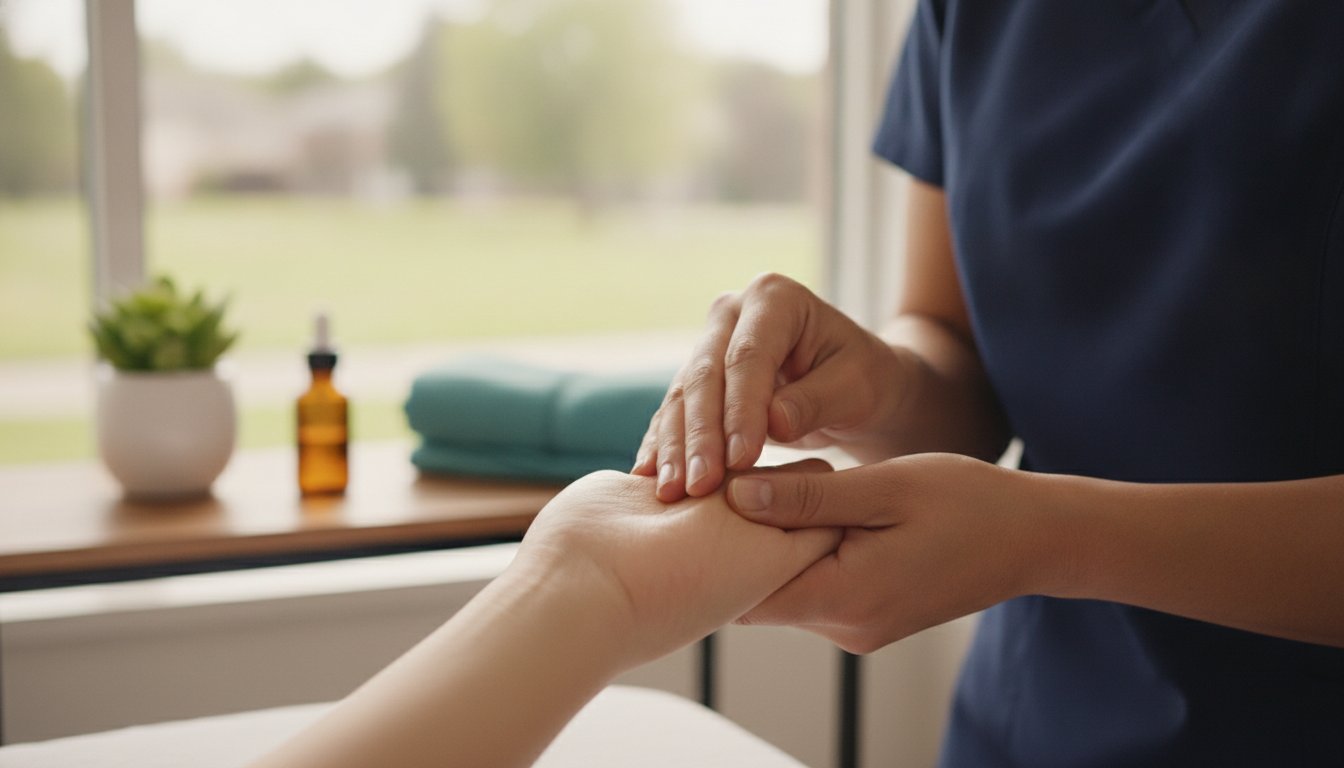
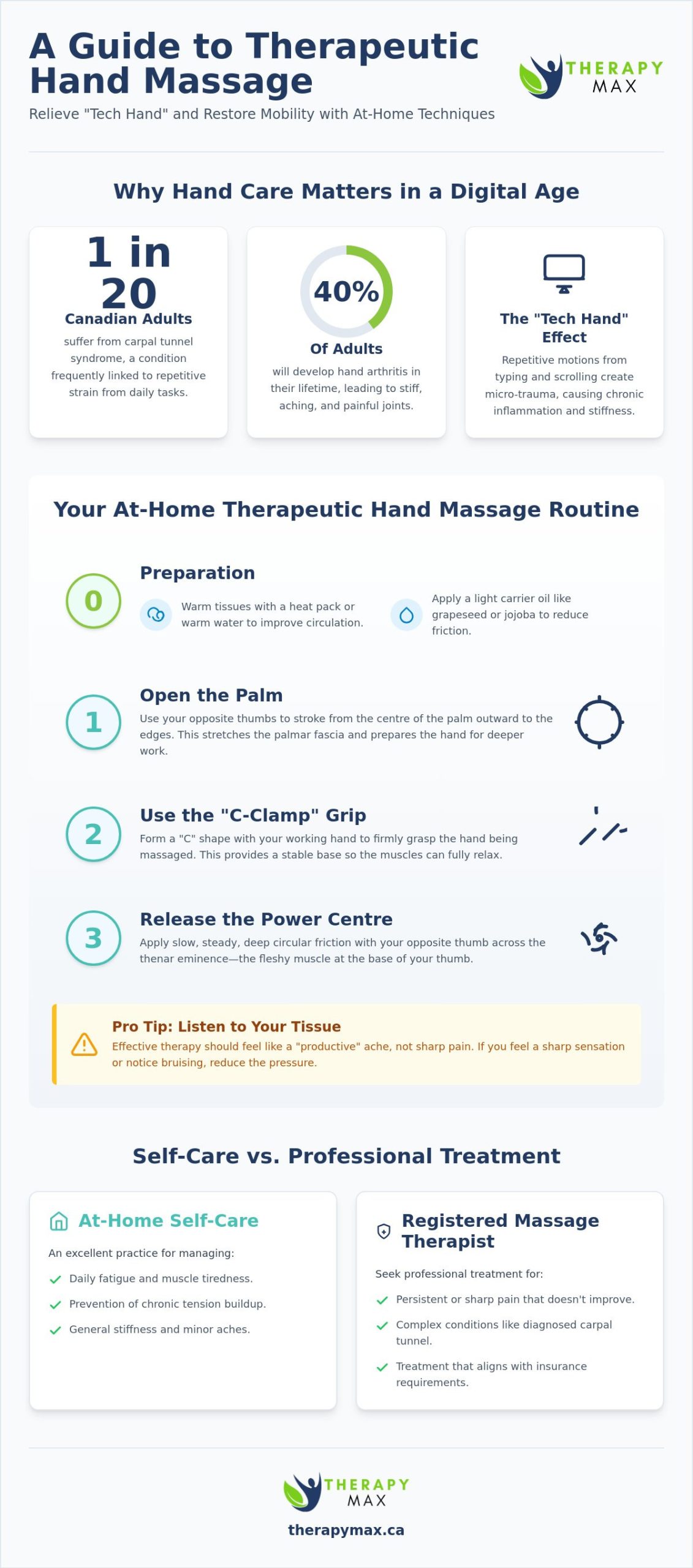
Did you know that nearly one in twenty Canadian adults suffers from carpal tunnel syndrome? For many, the simple act of typing an email or holding a smartphone has become a source of persistent discomfort. You likely realize that your hands are your most used tools, yet they are often the last part of the body to receive professional care. Learning how to perform a targeted massage on hands can be a vital step in managing the stiff, aching joints common in the forty percent of adults who develop hand arthritis during their lifetime.
This guide will teach you professional techniques to provide immediate relief and restore physical harmony. We will explore methods that move beyond surface-level comfort to address the physiological root causes of repetitive strain. You will learn the clinical benefits of these practices, specific self-care routines to improve mobility, and the essential markers that indicate it is time to consult a Registered Massage Therapist for specialized, evidence-based treatment. By understanding the mechanics of your own recovery, you can take an active role in maintaining your long-term health and vitality.
Key Takeaways
- Understand the impact of “Tech Hand” on your anatomy and how repetitive micro-trauma affects the complex bone and soft tissue structures of the hand.
- Learn a professional step-by-step method for massage on hands at home, including the clinical importance of warming the tissues and properly opening the palm.
- Identify how targeted massage techniques complement physiotherapy to reduce pain from carpal tunnel syndrome and improve joint lubrication for arthritis.
- Recognize when to transition from self-care to a Registered Massage Therapist to ensure your treatment aligns with Ontario’s regulated healthcare standards and insurance requirements.
- Discover how integrating holistic practices like Ayurvedic Abhyanga into your routine can nourish deep tissues and support a comprehensive recovery plan.
Understanding the Anatomy and Benefits of Massage on Hands
A professional massage on hands involves the deliberate, therapeutic manipulation of the hand’s 27 bones and its intricate web of tendons, ligaments, and muscles. These structures work in a delicate balance to provide both fine motor control and significant power. However, modern life often disrupts this physical harmony through the “Tech Hand” phenomenon. This condition occurs when the repetitive motions of scrolling and typing create micro-trauma in the soft tissues, which leads to chronic inflammation and stiffness. By applying specific massage therapy techniques, a practitioner can address these structural issues and restore proper function.
The palms of your hands are among the most sensory-dense areas of the human body. This high concentration of nerve endings means that a focused hand treatment does more than just soothe local muscles; it effectively triggers the parasympathetic nervous system. This physiological response shifts the body from a state of stress into a state of recovery. On a mechanical level, the pressure applied during a session improves local blood circulation. This increased flow is essential for flushing metabolic waste from the small muscles of the hand, which helps to reduce inflammation and promotes faster tissue repair.
The Kinetic Chain: Why Your Wrist and Forearm Matter
Hand pain rarely exists in isolation. Many of the discomforts felt in the palm or fingers actually originate in the muscles and tendons of the forearm. Your elbow alignment acts as a centre of movement; if the elbow is positioned poorly during daily tasks, it creates unnecessary tension that travels down the kinetic chain to the hand. This tension often contributes to conditions like carpal tunnel syndrome, where the narrow passageway of ligament and bones at the base of the hand compresses the median nerve. Integrating physiotherapy alongside massage can help manage these complex nerve issues by addressing the forearm tension that exacerbates hand pain. Similarly, nerve compression elsewhere in the body can produce radiating symptoms, and patients dealing with both hand and lower back discomfort may benefit from exploring sciatica treatment in Mississauga to address the full scope of their nerve-related pain.
Physiological Outcomes of Regular Hand Therapy
Consistent hand therapy provides measurable improvements in joint health and function. One primary benefit is the stimulation of synovial fluid production, which ensures smoother and more comfortable movement in the finger joints. This is particularly helpful for individuals who are starting to notice the early signs of stiffness. Regular sessions also help in the reduction of cortisol levels, which can change the physical colour of stress-related tension in the skin and tissues. Additionally, practitioners focus on the myofascial release of the thenar eminence, the fleshy area at the base of the thumb. Releasing this specific area can lead to an immediate improvement in grip strength and overall manual dexterity.
Step-by-Step Guide: How to Perform a Therapeutic Hand Massage at Home
Performing a regular massage on hands can significantly reduce daily fatigue and prevent the buildup of chronic tension. To begin, you must prepare the tissues by warming the hands; this can be achieved by washing them in warm water or using a heat pack for several minutes. Choose a light, non-greasy carrier oil like grapeseed or jojoba to ensure your hands can glide easily without leaving a heavy residue. Applying a small amount of oil prevents skin irritation and allows you to feel the underlying muscular structures more clearly.
Before focusing on specific sore spots, you must “open” the palm. Use both of your opposite thumbs to stroke from the centre of the palm outward toward the edges. This action stretches the palmar fascia and prepares the hand for deeper work. To maintain stability during your self-care session, utilize the “C-clamp” technique. Form a “C” shape with your working hand to firmly grasp the hand being treated; this provides a solid base so the muscles you are targeting can fully relax. Always listen to your tissue. If you feel a sharp sensation or notice bruising later, the pressure is too high. Effective therapy should feel like a “productive” ache rather than sharp pain.
The Palm and Thumb: Releasing the Power Centre
The thumb and palm bear the brunt of most manual tasks. Use your opposite thumb to perform deep circular friction across the thenar eminence, which is the large muscle at the base of the thumb. Move slowly and apply steady pressure to help the muscle fibres lengthen. Repeat this process on the hypothenar eminence located on the pinky side of your palm. To target the deep tension often found between the bones, use a firm, rhythmic pinching motion to compress and release the fleshy web space between your thumb and index finger. If you find that these home techniques provide only temporary relief, a professional Max Massage session can help address deeper chronic issues.
Fingers and Joints: Restoring Flexibility
Restoring mobility to the digits requires a gentle, methodical approach. Grip the base of each finger and apply light traction by pulling gently away from the hand while performing a slow, small rotation. This creates space within the joint and encourages the flow of synovial fluid. After treating the joints, use your fingertips to slide between the long metacarpal bones of the hand to reach the interosseous muscles. This helps reduce the “cramped” feeling caused by prolonged typing. Always move within a comfortable range of motion; avoid over-extending the finger joints during the stretching phase to prevent ligament strain.
Clinical Applications: Addressing Carpal Tunnel, Arthritis, and Repetitive Strain
Clinical massage therapy serves as a vital bridge between home-based maintenance and intensive medical intervention. While general relaxation is a pleasant side effect, the primary goal of clinical massage on hands is to address specific pathological conditions through targeted manipulation. For patients managing carpal tunnel syndrome, massage therapy often works in tandem with physiotherapy to reduce pressure on the median nerve. By releasing the transverse carpal ligament and the surrounding musculature, practitioners can create more space within the carpal tunnel itself, which helps to alleviate the pins-and-needles sensation that often disrupts sleep and work.
When addressing osteoarthritis or rheumatoid arthritis, the clinical approach shifts from deep tissue work to joint mobilization. The focus is on encouraging the production of synovial fluid to lubricate stiff joints rather than applying heavy pressure to inflamed areas. In cases of post-surgical recovery or injury, lymphatic drainage techniques are employed to manage oedema. This specialized form of light massage helps move excess fluid away from the hand and back into the circulatory system, which reduces swelling and restores a normal range of motion. Practitioners also look for active trigger points in the hand and forearm that may refer pain as far up as the shoulder, which helps to resolve complex pain patterns that surface-level treatments often miss.
Managing Carpal Tunnel Syndrome with Targeted Strokes
Effective treatment for carpal tunnel involves specific effleurage strokes that move fluid away from the wrist toward the larger lymph nodes in the arm. This reduces local congestion and eases the mechanical load on the wrist. It’s important for patients to realize that while massage provides significant relief, persistent numbness or a loss of motor control requires medical diagnostic testing to assess nerve damage. During a clinical session, the practitioner ensures the wrist remains in a neutral, supported position to prevent further nerve compression while they work on the surrounding soft tissues.
Arthritis Relief: Gentle Mobilization
For those living with arthritis, hydrotherapy is an essential precursor to massage. Applying moist warmth before the session helps to soften stiff collagen fibres and makes the subsequent mobilization more effective. The practitioner uses light, rhythmic vibrations on the knuckle joints to encourage movement without causing pain. This gentle approach helps maintain the manual dexterity required for daily tasks like buttoning a shirt or using cutlery. Regular hand care through clinical massage is not just about pain reduction; it’s a strategic way to preserve your independence and quality of life.
Professional vs. DIY: When to Visit a Registered Massage Therapist in Mississauga
While home techniques provide a useful foundation for daily maintenance, there is a distinct difference between a casual hand rub and a clinical Swedish massage. A professional massage on hands involves a structured assessment that considers the entire kinetic chain of the arm. In Ontario, Registered Massage Therapists (RMTs) must meet rigorous standards set by the College of Massage Therapists of Ontario. This regulation ensures that your therapist has the training to identify the root cause of your discomfort rather than simply treating surface-level symptoms. Choosing a regulated professional also ensures your safety and allows you to submit claims for extended health insurance coverage, which makes clinical care a sustainable part of your recovery plan.
A professional assessment in Meadowvale is particularly valuable for chronic conditions that don’t respond to simple stretching. If you find that your DIY efforts only provide fleeting relief, a therapist can investigate whether the tension is originating from deeper myofascial layers or joint restrictions. RMTs use their expertise to create a treatment plan that balances technical precision with patient comfort. This methodical approach leads to better long-term outcomes and helps prevent the recurrence of repetitive strain injuries.
The RMT Advantage: Assessment and Precision
Professional therapists utilize specific orthopedic testing to differentiate between nerve-related issues and simple muscular strain. This diagnostic approach is crucial for determining whether your pain stems from the wrist or is referred from the neck or shoulder. For structural issues involving the alignment of the 27 bones in the hand, manual osteopathy can provide further specialized care to restore physical harmony. Registered Massage Therapists in Mississauga can provide official receipts to facilitate your extended health benefits claims.
Safety and Contraindications
It is vital to recognize when you should not perform a massage on yourself. You should avoid applying pressure if you have an active infection, a suspected fracture, or acute inflammation with visible redness and heat. A professional therapist understands the subtle difference between “productive” discomfort and harmful pain that could exacerbate an injury. Their deep knowledge of human anatomy prevents accidental nerve compression, which is a common risk with high-pressure DIY devices. This expertise ensures that the treatment remains a safe harbor for your recovery.
If you experience persistent tingling, sharp shooting pains, or a noticeable loss of motor control, it is time to seek a professional assessment. Our practitioners are dedicated to finding the root cause of your hand pain and creating a personalized recovery strategy. Book an appointment with an RMT at TherapyMax to begin your journey toward lasting relief and improved mobility.
Integrating Hand Health into Your Wellness Routine with TherapyMax
Integrating a regular massage on hands into your broader wellness routine ensures that your most active tools receive the same level of care as your back or shoulders. While localized relief is essential, true recovery happens when you address the body as a whole. At our clinic, we often combine hand-specific protocols with a Max Massage session to facilitate full-body restoration. This comprehensive approach recognizes that hand tension frequently signals systemic stress or postural imbalances that require a broader clinical perspective to resolve effectively.
Between professional sessions, practicing “hand hygiene” is vital. This involves short, frequent breaks to perform the gentle stretches and joint mobilizations discussed earlier in this guide. By making these movements a habitual part of your day, you prevent the accumulation of the micro-trauma that leads to “Tech Hand.” Our practitioners work with you to identify the specific stressors in your daily life, which allows us to customize your treatment and your home-care instructions for the best possible results.
Specialized Ayurvedic Hand Care
Ayurvedic practices offer a unique, holistic dimension to hand health through the application of Abhyanga. This technique focuses on the “Marma points” within the hand, which are vital centres that correspond to various physiological and energetic systems. During an Ayurvedic session, we use warm herbal oils that are specifically selected for their ability to penetrate deeper into the soft tissues than standard lotions. This deep nourishment is particularly beneficial for those with chronic stiffness or dry, brittle connective tissues. Pairing this treatment with Shirodhara can further enhance the calming effect on the nervous system, which provides a profound sense of peace while your hands are being methodically restored.
Building a Maintenance Plan
A sustainable maintenance plan involves a strategic balance of professional intervention and environmental adjustments. For most individuals dealing with repetitive strain or mild arthritis, scheduling a professional session once every four to six weeks is sufficient to manage tension and prevent the return of acute pain. It’s also helpful to combine these sessions with targeted physiotherapy exercises to build long-term grip strength and resilience.
Beyond therapy, you should evaluate your workspace to ensure it minimizes the need for corrective treatment. Proper keyboard height and mouse placement can significantly reduce the mechanical load on your wrists and fingers. Taking the first step toward better hand health starts with a clinical assessment at our Mississauga clinic. Our team is dedicated to finding the root cause of your discomfort and designing a routine that supports your long-term vitality. Booking your initial consultation allows us to evaluate your specific needs and ensure your journey toward recovery is grounded in professional, evidence-based care.
Take the Next Step Toward Lasting Hand Relief
Your hands are essential to your daily life; they deserve specialized care that addresses the root cause of tension rather than just surface symptoms. By understanding the anatomy of the hand and its connection to the kinetic chain of the arm, you can move beyond temporary fixes. Whether you are managing the symptoms of carpal tunnel or looking to improve your manual dexterity, a professional massage on hands provides a safe and effective pathway to recovery. Consistent care helps to maintain joint mobility and prevents the accumulation of repetitive strain.
At TherapyMax, our Registered Massage Therapists (RMTs) have served the Meadowvale community with a commitment to clinical excellence and patient-centered warmth. We offer a range of specialized options, from evidence-based clinical treatments to the deep tissue nourishment of Ayurvedic Abhyanga. Our team is ready to help you restore physical harmony and maintain your long-term wellness through precise assessment and dedicated care. Book your Registered Massage Therapy session at TherapyMax in Mississauga today to begin your personalized recovery plan. We look forward to supporting your journey toward a life free from persistent hand pain.
Frequently Asked Questions
Is massage on hands safe for people with severe arthritis?
Yes, massage on hands is generally safe and beneficial for individuals with severe arthritis when performed with appropriate clinical modifications. A Registered Massage Therapist will avoid applying deep tissue pressure directly to inflamed joints; they focus instead on gentle mobilization and rhythmic vibrations. These specific techniques encourage the production of synovial fluid to lubricate the joints. This nurturing approach helps reduce stiffness and maintain manual dexterity without causing additional pain or irritation to the sensitive joint structures.
How often should I massage my hands if I work on a computer all day?
You should perform a brief self-massage daily to manage the repetitive strain of computer work. Aim for five minutes of gentle palm opening and finger stretches every few hours during your workday. For more comprehensive relief, a professional session every four to six weeks is recommended. This frequency allows an RMT to address deeper myofascial tension and postural imbalances that accumulate from prolonged typing and scrolling before they lead to chronic pain or numbness.
Can a hand massage help with carpal tunnel syndrome symptoms?
Hand massage can significantly alleviate carpal tunnel syndrome symptoms by reducing pressure on the median nerve. Clinical techniques focus on releasing the transverse carpal ligament and the surrounding forearm muscles to create more space within the carpal tunnel. This process improves local circulation and reduces the pins-and-needles sensation. While massage provides relief, it’s vital to consult a professional for a full assessment to determine if additional physiotherapy or medical diagnostic testing is required for your recovery.
Do I need to use oil or lotion for an effective hand massage?
Using a light, non-greasy carrier oil or lotion is highly recommended for an effective massage on hands. These lubricants reduce friction on the skin; this prevents irritation and allows for smoother, more controlled therapeutic movements. Oils like jojoba or grapeseed are excellent choices because they absorb well without leaving a heavy residue. Using a lubricant also enhances your ability to feel the underlying muscular structures, which makes it easier to target specific trigger points in the palm.
What is the difference between a hand massage and a reflexology session?
A hand massage focuses on the musculoskeletal system to relieve local tension and improve mobility in the 27 bones and complex soft tissues. In contrast, reflexology is a specialized practice based on the theory that specific points on the hand correspond to different organs and systems throughout the body. While both techniques provide relaxation, a clinical hand massage is primarily designed to address physical issues like stiffness, repetitive strain, and joint inflammation through direct physiological manipulation.
How long does a typical professional hand massage session last at a clinic?
A professional hand massage is typically integrated into a broader 30, 60, or 90 minute treatment session. While a therapist may spend 15 to 20 minutes specifically focusing on the hands and forearms, the exact duration depends on your clinical needs and goals. If your primary concern is repetitive strain or arthritis, your practitioner will allocate more time to these areas to ensure a thorough assessment and effective therapeutic manipulation of the affected tissues.
Can hand massage help with cold hands or poor circulation?
Yes, hand massage is an effective way to improve circulation and warm cold hands. The mechanical action of the massage stimulates blood flow to the small muscles and capillaries in the extremities. This increased circulation delivers essential oxygen and nutrients to the tissues while helping to flush out metabolic waste. Regular sessions can be particularly helpful during colder months or for individuals who experience reduced blood flow due to prolonged periods of inactivity or stationary desk work.
Is hand massage covered by my Ontario health insurance (RMT benefits)?
Hand massage is covered by most extended health insurance plans in Ontario if the treatment is performed by a Registered Massage Therapist. RMTs are regulated health professionals who provide official receipts for insurance claims. It’s important to check your specific policy to realize the extent of your coverage and whether your provider requires a doctor’s referral. Utilizing these benefits makes regular clinical care a more accessible part of your long-term wellness strategy and physical recovery.
