

What if the persistent ache in your lower back isn’t a permanent fixture of your life, but a signal that your body is ready for a professional recalibration? Many people in Mississauga live with chronic discomfort or limited mobility, and finding the right physiotherapy clinic is often the first step toward reclaiming physical freedom. It’s common to feel frustrated when stiffness dictates your daily schedule or to feel confused by the differences between various manual therapies. You deserve a clear path forward that moves beyond temporary fixes to address the underlying mechanics of your movement.
In this guide, you’ll discover how professional physiotherapy can help you restore function, manage chronic pain, and return to the activities you love through evidence-based care. We’ll provide clarity on how a clinical assessment identifies the root cause of your symptoms rather than just treating the surface effects. By the end of this article, you’ll understand how a personalized plan can reduce your pain levels and provide a structured map for your recovery and long-term mobility.
Key Takeaways
- Understand how professional physiotherapy utilizes clinical biomechanics and evidence-based practice to address the root cause of your physical discomfort.
- Learn to recognize the specific warning signs that indicate your body requires a professional assessment to prevent long-term mobility issues.
- Gain a clear understanding of the collaborative goal-setting process that ensures your recovery plan aligns with your personal lifestyle and return-to-work needs.
- Explore the advantages of integrated care where clinical expertise and Registered Massage Therapy work together to support your long-term health and vitality.
What is Physiotherapy? Understanding the Science of Movement
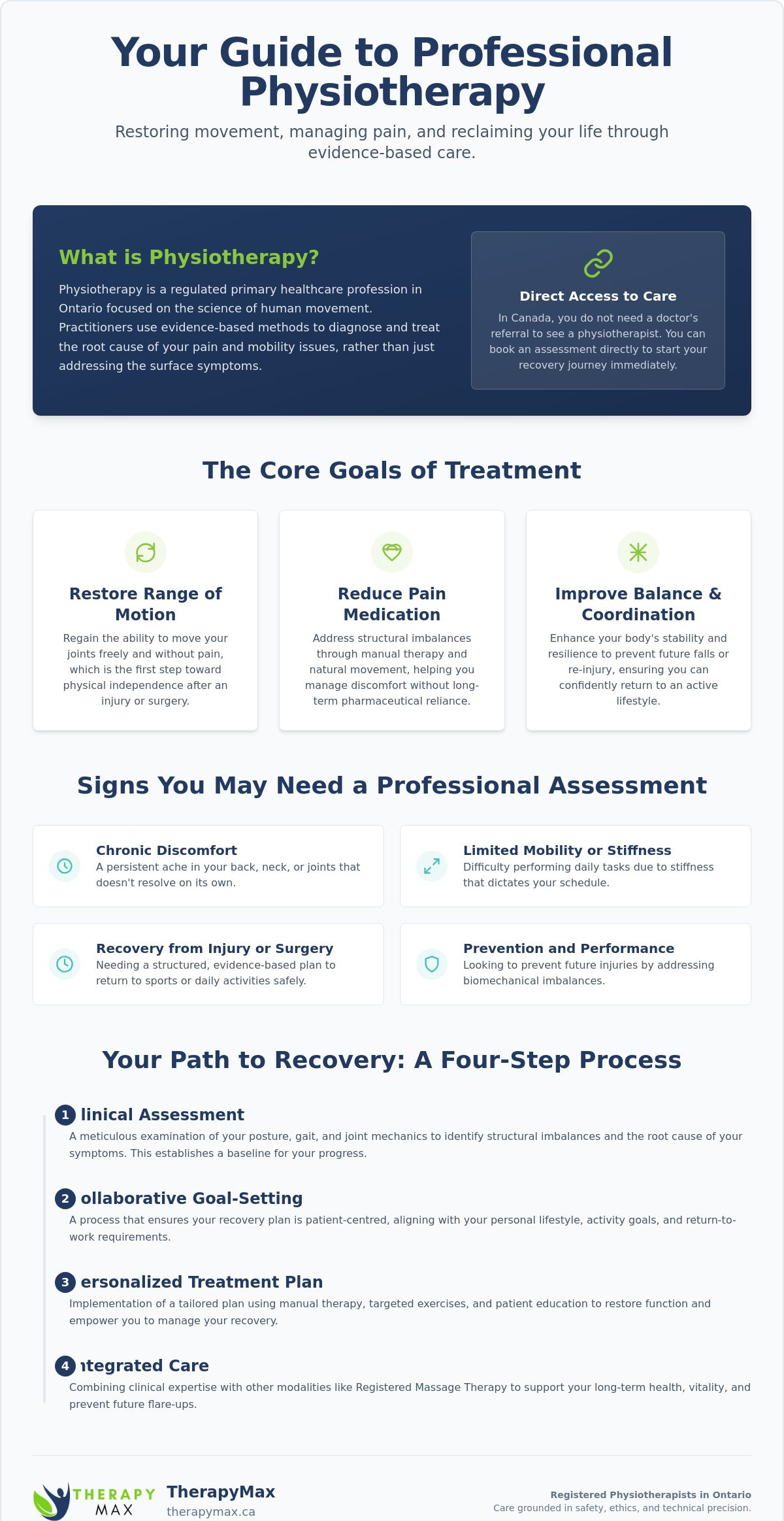
Physiotherapy is much more than a collection of exercises or a post-surgical requirement. It’s a regulated primary healthcare profession in Ontario that focuses on the complex science of human movement. When you visit a clinic, you aren’t just seeing a technician; you’re consulting with a movement specialist who is trained to understand your body’s biomechanics. These practitioners use evidence-based practice to diagnose the root cause of your pain rather than simply addressing the symptoms on the surface. This clinical approach ensures that every treatment is tailored to the unique physiological needs of the individual.
One of the most common misconceptions for residents in Mississauga is that you need a doctor’s referral to begin treatment. In Canada, physiotherapy is a direct-access profession. This means you can book an assessment whenever you feel your mobility is compromised or your quality of life is being affected by physical discomfort. This autonomy allows you to take charge of your recovery journey immediately without waiting for a general practitioner’s note. For those curious about the broader scope of the field, understanding What is Physiotherapy? can provide a helpful foundation for how these clinical methods have evolved into the sophisticated, hands-on treatments used today.
The Core Goals of Treatment
The primary objective of any treatment plan is the restoration of physical harmony. This process is methodical and patient-centered, focusing on three essential pillars of health:
- Restoring range of motion: Whether you’re recovering from a sports injury or a complex surgery, regaining the ability to move your joints freely is the first step toward independence.
- Reducing reliance on pain medication: By addressing structural imbalances through natural movement and manual therapy, many patients find they can manage their discomfort without long-term pharmaceutical intervention. This holistic approach can be further supported by natural anti-inflammatory options, such as the PEA supplements offered by relievetherapeutics.com.au.
- Improving balance and coordination: This is crucial for preventing future falls or re-injury. It ensures that your body remains resilient and stable as you return to your active lifestyle or workplace.
Physiotherapy vs. Physical Therapy: Is There a Difference?
You might hear people use different terms for this practice depending on where they’re from. In Canada, “physiotherapy” and “physical therapy” are used interchangeably to describe the same clinical service. To become a Registered Physiotherapist (PT) in Ontario, a practitioner must complete rigorous university education, typically a Master’s degree in the field. They must also be registered with the College of Physiotherapists of Ontario. This regulatory body exists to protect the public by ensuring that every therapist adheres to high standards of practice, ethics, and ongoing professional development. This oversight provides you with the peace of mind that your care is grounded in safety and technical precision.
Beyond Exercise: How Physiotherapists Assess and Treat Pain
A professional assessment is the cornerstone of effective recovery. Unlike a general wellness check, this process involves a meticulous examination of your posture, gait, and joint mechanics to identify structural imbalances. By understanding how one part of your body compensates for another, a therapist can determine why a specific area is under stress. This level of technical precision is essential for anyone wondering When Should You See a Physiotherapist, as it moves beyond symptom management toward true resolution. During this initial phase, your practitioner will evaluate your strength and range of motion to build a baseline for your progress.
Many patients feel confused about how clinical manual therapy differs from a traditional massage. While massage therapy often focuses on general relaxation and circulation, the manual techniques used in physiotherapy are specifically targeted at improving the mechanical function of your joints and muscles. These sessions might include specialized adjuncts like cupping therapy or hot stone therapy to prepare the tissues for deeper work and improve local circulation. Patient education is also a vital part of this process. When you understand the mechanics of your injury, you are better equipped to manage your long-term recovery and prevent future flare-ups. If you are ready to experience this level of targeted care, you can learn more about our clinical approach to recovery.
Manual Therapy and Hands-On Techniques
Manual therapy is a clinical approach that uses skilled hand movements to improve tissue extensibility. Practitioners use joint mobilization to address stiffness and restore the natural glide of a joint, which is often restricted after periods of inactivity or injury. They also employ soft tissue release to manage muscle guarding and tension that can develop as a protective response to pain. These hands-on interventions are designed to create an optimal environment for healing by reducing physical barriers to movement.
Functional Exercise Prescription
It is tempting to search for “YouTube exercises” when you feel a twinge in your back or neck. However, these generic movements often fail because they aren’t tailored to your specific structural needs or current stage of healing. A professional plan is progressive; it adapts as your body heals and becomes stronger. This is particularly vital for “pre-hab,” where patients perform targeted movements to prepare their bodies for surgeries like hip or knee replacements. Strengthening the surrounding musculature before a procedure often leads to faster post-operative outcomes and a smoother return to daily activities.
When Should You See a Physiotherapist in Mississauga?
Recognizing when your body needs professional support is the first step toward long-term health. For many residents in Mississauga, physical strain is often tied to daily routines. Long hours spent commuting on the 401 or the QEW contribute to a specific type of discomfort known as “commuter back,” characterized by stiffness in the lumbar spine. Similarly, spending the workday in a Meadowvale office tower frequently leads to chronic neck strain and tension headaches. You might feel that these aches are simply a normal part of a busy life, but they are often signals that your body’s biomechanics are out of alignment.
The most common objection to seeking care is the belief that pain will eventually disappear on its own. While minor muscle soreness from a new activity might fade, persistent discomfort usually indicates an underlying mechanical issue. Waiting for the pain to “go away” often forces your body to develop compensation patterns. These patterns place undue stress on other joints and muscles, which can lead to secondary injuries. Seeking physiotherapy early allows you to address the root cause of the problem before it becomes a chronic condition. This is especially true for sports injuries. Whether you are active in local soccer leagues or weekend running groups, treating a sprain or ligament tear immediately prevents the development of long-term joint instability.
Common Conditions Treated
Clinical intervention is effective for a wide range of issues that affect your daily mobility and comfort. Common conditions that benefit from a structured recovery plan include:
- Chronic back and neck pain: Often stemming from prolonged sitting or poor ergonomic setups at work.
- Repetitive strain injuries (RSI): Common in both desk-based professionals and those performing manual labour.
- Sports-related injuries: Including acute sprains, muscle strains, and complex ligament tears.
- Post-surgical rehabilitation: Essential for those recovering from joint replacements, ligament repairs, or fractures.
The “Red Flags”: When It Is Not Just a Sore Muscle
Sometimes, physical symptoms require more urgent attention. It is important to distinguish between general stiffness and signs of nerve involvement or structural damage. You should book an assessment if you experience numbness or tingling that radiates down your arms or into your legs. Pain that wakes you up at night or fails to improve with rest is another significant indicator that your body needs professional help. Additionally, a sudden loss of strength in a limb or unexplained changes in your balance should never be ignored. These symptoms suggest that the issue has moved beyond a simple muscle pull and requires a clinical diagnosis to ensure your safety and recovery.
The Road to Recovery: What to Expect During Your First Visit
Walking into a clinical environment for the first time can often cause a sense of uncertainty or anxiety. Understanding exactly what happens during an initial physiotherapy assessment helps to replace that hesitation with confidence. This first appointment is a collaborative process between you and your practitioner. It is designed to move beyond surface-level symptoms to build a comprehensive map of your physical health. To prepare for your session, please consider the following checklist:
- Wear comfortable clothing: Bring shorts or a tank top that allows the therapist to easily observe the area of concern.
- Gather your medical history: Bring copies of any relevant X-rays, MRIs, or notes from your family physician.
- Define your goals: Think about specific activities you want to return to, such as playing a full round of golf at a Mississauga course or being able to sit through a morning of meetings without discomfort.
- Arrive early: Give yourself ten minutes to complete any necessary intake forms in our calm, welcoming environment.
Step 1: The Initial Consultation and History
Your session begins with what clinicians call the “subjective assessment.” This is the narrative part of the visit where you discuss your pain history and how it affects your daily lifestyle. Your therapist will ask detailed questions about when the discomfort started and what movements make it better or worse. This conversation is essential for establishing a baseline of your current function. By reviewing your medical imaging and history, the practitioner ensures that your recovery plan is grounded in technical precision and clinical safety.
Step 2: Physical Examination and Testing
Once the history is established, the therapist moves into the “objective assessment.” During this phase, the practitioner performs a series of physical tests to evaluate your range of motion, muscle strength, and neurological function. They may ask you to perform functional movements, such as walking or squatting, to observe how your joints and muscles work together. The physical exam allows the therapist to realize the exact mechanics causing your discomfort. This methodical testing ensures that the diagnosis is based on observable data rather than guesswork.
Step 3: Your Personalized Treatment Plan
The final stage of your visit involves the creation of a structured recovery roadmap. Your therapist will explain their findings and outline how many sessions you will likely need to reach your goals. They will also provide a set of home exercises tailored to fit into a busy Mississauga schedule. These movements are designed to be efficient so you can easily integrate them into your routine. If you are unsure if your symptoms require this level of care, you can review our guide on When to See a Physiotherapist for Persistent Pain. Taking this first step is the most effective way to ensure your long-term mobility and peace of mind. You can book your initial assessment today to begin your journey toward physical harmony.
Integrated Care at TherapyMax: Combining Physiotherapy with Holistic Wellness
At TherapyMax, we believe that recovery is not a one-dimensional process. Our philosophy of “Nurturing Expertise” defines our approach in Meadowvale; we combine the scientific rigour of a regulated medical environment with the patient-centred warmth of a wellness sanctuary. This means your journey toward health is guided by practitioners who are equally invested in technical precision and your overall sense of peace. While previous sections have detailed the clinical mechanics of physiotherapy, the most profound results often occur when we integrate multiple disciplines to address the root cause of your concerns. We recognize that every body is unique, so we ensure that all treatments are tailored to your specific comfort level and physical pace.
The Synergy of Physio and Massage
Combining different modalities allows us to treat the body as an interconnected system rather than a collection of isolated symptoms. Registered Massage Therapy (RMT) serves as an excellent precursor to clinical movement work. When a therapist uses deep tissue or Swedish techniques to reduce muscle guarding, it effectively prepares the tissues for more effective joint mobilization. This dual approach addresses both the mechanical aspects of pain through physiotherapy and the muscular tension through massage. By releasing soft tissue restrictions first, the manual techniques used in your clinical sessions can achieve deeper, more lasting results. You can explore the specific benefits of this collaborative approach in our guide on Integrated Care: Combining Massage and Physiotherapy.
In addition to massage, Manual Osteopathy plays a vital role in our integrated model. While physiotherapy focuses on restoring functional movement and biomechanics, osteopathic manual therapy looks at the body’s structural alignment and the health of the underlying systems. This holistic perspective ensures that we aren’t just fixing a single joint but are supporting the physical harmony of your entire body. Whether you are managing a sports injury or chronic postural strain, this combination of therapies provides a comprehensive foundation for healing. To see how other practitioners apply this blend of care, you can discover Dr. Philip Boamah | Natural Medicine & Physical Therapy and their integrative model of health.
Why Choose Our Meadowvale Clinic?
Our clinic is designed to be a safe harbour for those seeking relief in Mississauga. We prioritize personalized one-on-one sessions to ensure that your therapist has the time to be methodical, observant, and thorough. This focus on individual attention allows us to find the root cause of your discomfort rather than just treating the surface symptoms. Our professional environment offers a calm space where you can focus entirely on your vitality and recovery. Conveniently located for residents of Meadowvale and the surrounding Mississauga areas, we provide a reliable destination for those who value long-term well-being over quick fixes. We invite you to experience a clinical partnership that values your health as much as you do.
Take the Next Step Toward Lasting Physical Harmony
Recovering your mobility is a methodical journey that begins with understanding the specific mechanics of your body. You’ve learned how a clinical assessment identifies the root cause of discomfort and why waiting for pain to fade can often lead to further structural imbalances. By choosing a path that combines the technical precision of Registered Physiotherapists (PT) with integrated options like Registered Massage Therapy and Manual Osteopathy, you provide your body with the comprehensive support it needs to heal. This multi-faceted approach ensures that both muscular tension and mechanical dysfunction are addressed simultaneously.
Our clinic is located in the heart of Meadowvale, Mississauga, offering a professional and calm environment for your recovery. Whether you are addressing a recent sports injury or managing chronic postural strain from a long commute, our team is dedicated to your long-term well-being. We invite you to Book Your Physiotherapy Assessment at TherapyMax Mississauga to begin your personalized recovery plan. You don’t have to navigate physical discomfort alone; professional physiotherapy is a reliable partnership designed to help you return to the activities you love with confidence and ease.
Frequently Asked Questions
Do I need a doctor referral for physiotherapy in Ontario?
You don’t need a doctor’s referral to see a physiotherapist in Ontario because they’re regulated primary healthcare professionals. You can book an assessment directly whenever you experience pain or mobility issues. However, some private insurance providers still require a referral to process your reimbursement claims. It’s always a good idea to check your specific policy requirements before your first visit to ensure your coverage remains intact.
How many physiotherapy sessions will I need to see results?
The number of sessions required depends entirely on the nature of your injury and your personal recovery goals. Most patients begin to realize noticeable improvements in their mobility or pain levels within three to six visits. Chronic conditions or post-surgical rehabilitation typically require a longer, structured plan to ensure long-term stability. Your therapist will provide a clear timeline after your initial assessment to manage your expectations effectively.
Is physiotherapy covered by my workplace insurance (EHC)?
Most extended health care (EHC) plans in Ontario provide coverage for registered physiotherapy services. The amount of coverage varies by provider; many plans offer between C$300 and C$1,000 per calendar year. We recommend contacting your insurance provider to confirm your specific limits and whether they offer direct billing. This ensures you can focus on your recovery without worrying about the administrative details of your claim.
What is the difference between physiotherapy and osteopathy?
Physiotherapy focuses primarily on biomechanics, functional movement, and restoring strength after an injury. In contrast, manual osteopathy takes a broader view of the body’s structural alignment and how different physiological systems interact. While both use hands-on techniques, physiotherapists often utilize progressive exercise as a core part of treatment. At our clinic, we often combine these disciplines to address both the mechanical and systemic causes of your discomfort.
Will physiotherapy be painful if I am already in injury distress?
Your comfort is our priority, and treatment shouldn’t be a source of additional distress. While some manual techniques might feel intense as we address deep-seated tension, your therapist will always work within your personal pain tolerance. The goal is to reduce your symptoms through gentle mobilization and controlled movement. We encourage open communication throughout your session so we can adjust our approach to match your body’s current state of healing.
What should I wear to my first physiotherapy appointment?
You should wear loose, comfortable clothing that allows for easy movement and provides access to the area being treated. For example, shorts are ideal for knee or hip assessments, while a tank top is helpful for neck and shoulder issues. If you’re coming from work, you can bring a change of clothes to our Meadowvale clinic. Wearing athletic shoes is also beneficial if your therapist needs to assess your gait or balance.
Can physiotherapy help with chronic headaches or migraines?
Physiotherapy is highly effective for treating cervicogenic headaches, which are caused by issues in the neck and upper spine. By addressing postural imbalances and muscle tension in the cervical region, we can reduce the frequency and intensity of your symptoms. We use a combination of manual therapy and ergonomic education to help you manage triggers in your daily environment. This clinical approach provides long-term relief by treating the mechanical source of the head pain.
How long does a typical physiotherapy session last at TherapyMax?
An initial assessment and treatment session typically lasts 60 minutes to allow for a thorough clinical evaluation. Follow-up appointments are generally scheduled for 30 or 45 minutes, depending on the complexity of your treatment plan. These unhurried sessions ensure that your therapist can provide the focused, one-on-one care required for effective results. We value your time and strive to maintain a methodical pace that respects your recovery journey.
