
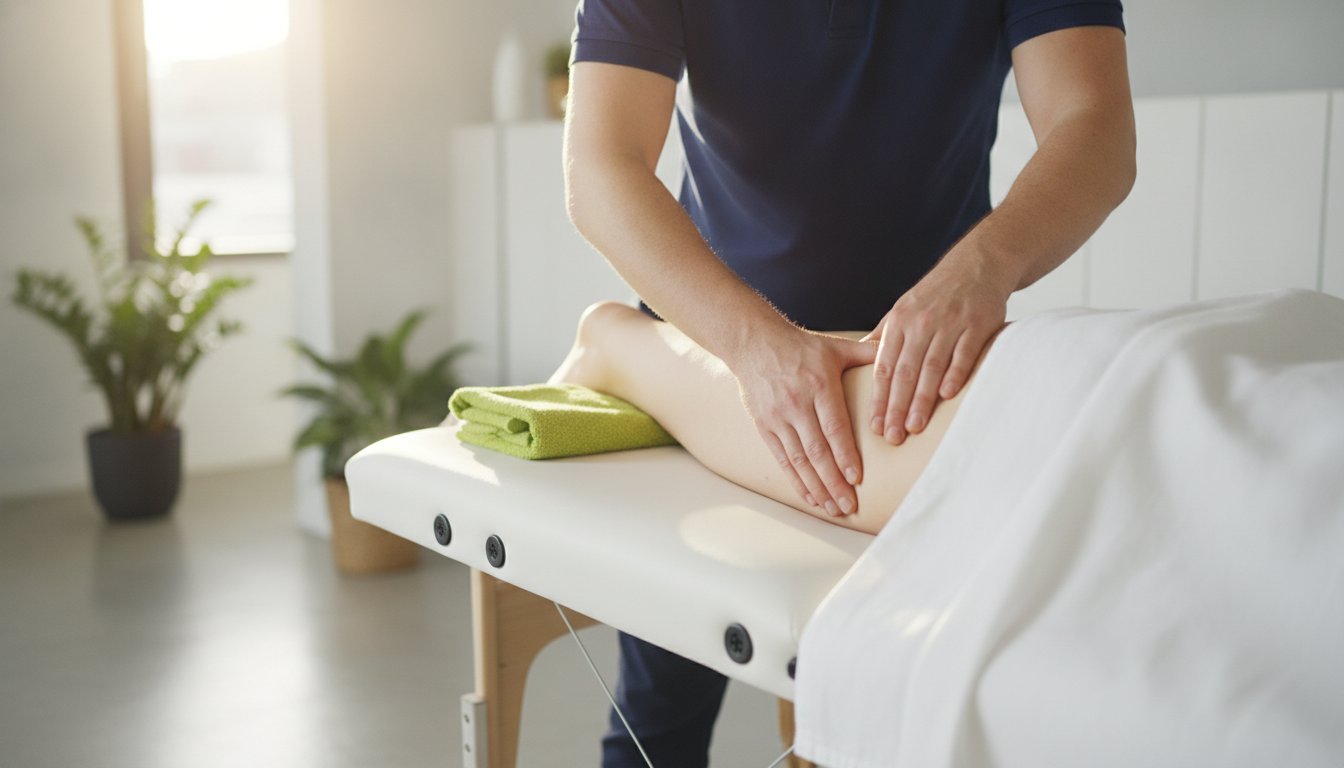
You wake up at 3:00 AM because you shifted in your sleep and landed on your side, sending a sharp, burning sensation through your hip. It’s a familiar frustration that makes even a simple night’s rest feel like a challenge. If you find yourself dreading the stairs or feeling a pinch with every step, you’re likely searching for effective bursitis hip therapy that actually lasts. Many people feel stuck in a cycle of temporary relief, only to have the ache return the moment they resume their normal routine.
We understand that you want more than just a quick fix; you want to reclaim your mobility and avoid invasive options like cortisone shots or surgery. This guide explores how an integrated approach of physiotherapy, osteopathy, and massage therapy works to address the root cause of your discomfort. By focusing on hip stability and physical harmony, you can achieve long-term pain reduction and get back to the activities you love. We’ll walk you through the clinical assessments and personalized treatments available at our Mississauga centre to help you realize a future of lasting comfort and improved quality of life.
Key Takeaways
- Identify the specific triggers of trochanteric bursitis and why lateral hip pain often intensifies during rest or physical activity.
- Learn how a multidisciplinary approach to bursitis hip therapy addresses mechanical root causes to provide lasting relief and improved joint function.
- Discover the clinical benefits of combining Swedish and Deep Tissue massage to support circulation and reduce systemic inflammation.
- Master practical home management techniques, including the PRICE method and corrective sleeping positions, to protect your hip joint daily.
- Understand how integrating physiotherapy with manual osteopathy helps restore structural balance to the pelvis and spine for long-term recovery.
Understanding Hip Bursitis: Why Your Hip Joint Is Inflamed
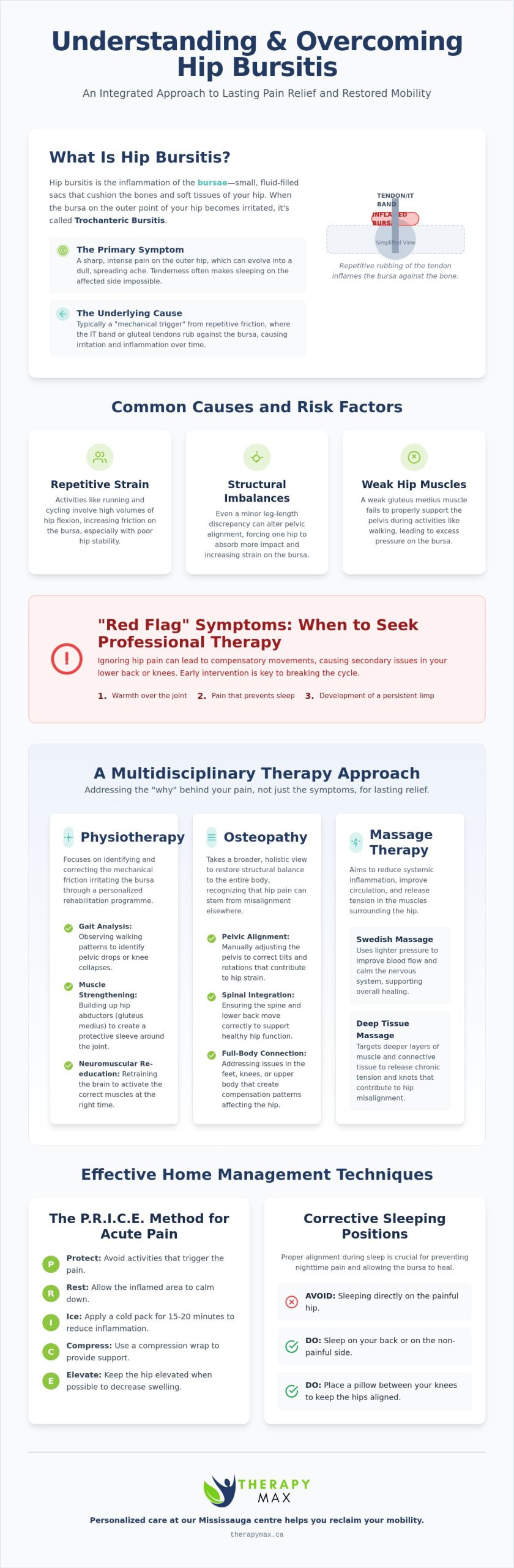
Hip bursitis is more than just a localized ache. It involves the inflammation of the small, fluid-filled sacs known as bursae. These sacs act as essential cushions between your bones and the surrounding soft tissues, such as tendons and muscles. When the bursa located at the bony prominent point of your hip becomes irritated, it is clinically referred to as trochanteric bursitis. This condition is a primary driver of Greater trochanteric pain syndrome. Patients typically report a sharp, intense pain on the outer hip that can eventually transition into a dull, spreading ache. This tenderness often makes it nearly impossible to lie on your side at night, which significantly disrupts your sleep and recovery.
The inflammation is rarely a random accident. It is usually a “mechanical trigger” caused by repetitive friction. Your iliotibial (IT) band or the gluteal tendons may rub against the bursa with every step you take. Over time, this constant friction causes the bursa to thicken and lose its ability to facilitate smooth movement. While acute bursitis can occur from a direct impact or fall, most people seeking bursitis hip therapy are dealing with chronic, degenerative changes. These changes develop over months of poor movement patterns and mechanical stress, requiring a targeted approach to resolve the irritation.
Common Causes and Risk Factors
Repetitive strain is the most frequent cause of this condition. Runners and cyclists are particularly susceptible because of the high volume of hip flexion and extension involved in their sports. If your hip stability is compromised, the bursa takes the brunt of the pressure. Leg-length discrepancies also play a significant role. Even a minor difference in leg length can shift your pelvic alignment, forcing one hip to absorb more impact. Additionally, sedentary lifestyles often lead to weak gluteus medius muscles. When these muscles don’t support your pelvis properly, the bursa is strained during simple daily activities like walking or climbing stairs. Active individuals who train frequently may also benefit from incorporating sports massage into their recovery routine to manage the cumulative soft tissue stress that contributes to hip overuse injuries.
When to Seek Professional Therapy in Mississauga
You shouldn’t wait for hip pain to disappear on its own. If you notice “red flag” symptoms like warmth over the joint, pain that prevents sleep, or a persistent limp, a clinical assessment is necessary. Ignoring the problem often leads to compensatory movements. You might start leaning to one side or changing your gait, which eventually causes lower back pain or knee strain. Early intervention with a Registered Massage Therapist (RMT) or physiotherapist can break this cycle. Effective bursitis hip therapy focuses on calming the initial inflammation while correcting the structural imbalances that caused the friction in the first place.
The Role of Physiotherapy and Osteopathy in Hip Recovery
Effective recovery from hip pain requires looking beyond the inflammation itself. While many people focus on the bursa, the actual problem often lies in how the hip joint moves. Physiotherapy is designed to identify and correct the mechanical friction that irritates the bursa in the first place. By assessing your movement patterns, a therapist can determine why certain tissues are rubbing against the bone. This proactive approach ensures that bursitis hip therapy addresses the “why” behind your pain, not just the symptoms.
A comprehensive assessment often begins with a gait analysis. This involves observing how you walk to see if your pelvis drops or your knees cave inward. These subtle misalignments create a shearing force on the hip. When these mechanical issues are ignored, traditional Hip Bursitis treatment options like rest or ice only provide temporary relief. A therapist uses this data to develop a personalized rehabilitation programme that targets your specific weaknesses and restores your mobility.
Physiotherapy Techniques for Hip Stability
Physiotherapy focuses on building a protective sleeve of muscle around the joint. We prioritize strengthening the hip abductors, specifically the gluteus medius, to prevent the pelvis from tilting during activity. Neuromuscular re-education is also vital. This process teaches your brain to activate the right muscles at the right time, ensuring the hip joint tracks correctly. Physiotherapy reduces bursa pressure by correcting abnormal movement patterns and improving the structural support of the hip joint.
Osteopathic Manual Therapy for Pelvic Alignment
Manual Osteopathy takes a broader view of the body. Instead of looking only at the hip, an osteopathic practitioner examines how the spine, pelvis, and lower limbs work together. Gentle joint mobilization can help restore a full range of motion that may have been lost due to chronic guarding. We also address myofascial restrictions in the lower back and legs, as tension in these areas often pulls the hip out of alignment. This holistic approach supports the body’s natural inflammatory resolution by improving circulation and drainage around the affected area. If you’re struggling with persistent discomfort, a session of Manual Osteopathy in Mississauga can help restore your body’s physical harmony and balance.
By combining these two disciplines, we create a stable foundation for your recovery. This integrated method ensures that your hip can handle the demands of daily life without the risk of recurring inflammation. Long-term relief is possible when you prioritize joint tracking and pelvic stability as part of your overall health plan.
While our focus is on hands-on care in Mississauga, those interested in how specialized clinics in other regions incorporate advanced technology into their recovery plans can visit Optima Physical Therapy to learn about their AI-driven concierge services.
Clinical Massage Therapy for Bursitis: Swedish vs. Deep Tissue
Clinical massage therapy serves as a vital bridge between corrective exercise and structural realignment. Unlike generic relaxation treatments, an RMT-led session focuses on the specific physiological needs of the hip joint. This professional oversight is essential because an inflamed bursa is highly sensitive to improper pressure. By addressing the soft tissue tension that often perpetuates bursal irritation, massage therapy ensures that your bursitis hip therapy is both comprehensive and effective.
The choice between Swedish and deep tissue techniques depends on the current stage of your recovery. During an initial assessment, we determine which approach will best support your healing without causing unnecessary discomfort. Our goal is to restore physical harmony while respecting the body’s natural limits. This methodical process allows us to target the root cause of your pain while providing a safe harbor for your recovery.
Swedish Massage for Pain Management
Swedish massage is often the first step for patients in the acute phase of recovery. This technique utilizes long, flowing strokes to increase local circulation and move metabolic waste away from the hip joint. By promoting lymphatic drainage, Swedish massage helps reduce the systemic inflammation that often accompanies the conditions described in this physical therapy guide for hip bursitis. The increased blood flow brings oxygen and nutrients to the area, which speeds up the repair of irritated tissues.
Beyond the physical benefits, the relaxation provided by this modality lowers cortisol levels. High stress often heightens your perception of pain, making recovery feel more difficult than it needs to be. For those who can’t sleep on their side due to tenderness, the soothing nature of Swedish massage provides a necessary reprieve. It allows the body to shift out of a “guarding” state, where muscles are perpetually clenched to protect the joint. This shift is crucial for restoring a normal, pain-free range of motion.
Targeted Deep Tissue for Mechanical Release
As the initial inflammation subsides, bursitis hip therapy often shifts toward deeper mechanical release. Deep tissue massage focuses on the gluteal complex and the Tensor Fasciae Latae (TFL). These muscles directly influence the tension of the iliotibial (IT) band. When the IT band is too tight, it snaps over the bony part of the hip, creating the friction that causes bursitis. An RMT uses focused pressure to break down adhesions in these muscle layers, which prevents them from pulling on the joint. For patients with persistent deep-seated muscle tension that standard massage techniques struggle to reach, cupping therapy in Mississauga offers a complementary approach that lifts and decompresses soft tissue to release chronic restrictions around the hip and gluteal region. For athletes and active individuals, pairing this work with a dedicated sports massage programme in Mississauga can further accelerate tissue recovery and help prevent the recurrence of IT band tightness.
Deep tissue massage must be applied carefully around an inflamed bursa to avoid aggravating the sensitive tissue and increasing localized swelling. By balancing intensity with your specific comfort levels, we ensure the treatment remains therapeutic rather than painful. This release restores the natural glide of the soft tissues and reduces the mechanical load on the joint. Over several sessions, this targeted work helps resolve chronic friction, allowing you to return to walking and climbing stairs without the familiar pinch of hip pain.
Home Management and Corrective Exercises for Hip Pain
Recovery is a continuous process that extends far beyond the clinic walls. While manual treatments address structural issues, your daily habits provide the environment your body needs to heal. We recommend the PRICE method as a foundational tool for managing acute flare-ups. Protection involves avoiding direct pressure on the affected side. Rest does not mean total inactivity, but rather choosing low-impact movements that don’t aggravate the joint. Applying ice for 15 minutes can help manage local heat, while compression and elevation support the reduction of minor swelling. These simple steps create a safe harbor for the joint during the initial stages of bursitis hip therapy.
Safe sleeping positions are essential for restorative rest. Many patients find that sleeping on the unaffected side with a firm pillow between the knees provides the most relief. This alignment prevents the top leg from crossing the midline of the body, which reduces the compressive force on the trochanteric bursa. If you prefer sleeping on your back, placing a small bolster under your knees can help offload the hip flexors and lower back. These small adjustments often mean the difference between waking up in pain and feeling refreshed.
A common pitfall in home care is the urge to over-stretch. You might feel a sense of “tightness” and assume that aggressive pulling will help. However, pulling the knee across the body can actually squeeze the bursa against the bone, causing further irritation. Effective bursitis hip therapy prioritizes stability and gentle activation over intense flexibility. Focusing on controlled movements allows the tissues to strengthen without being subjected to unnecessary friction.
Essential Stretches and Strengthening
We focus on building lateral hip stability through targeted exercises like the Clamshell. This movement strengthens the gluteus medius, which is the primary protector of the hip joint. Glute bridges are also vital for posterior chain activation, ensuring that the larger muscles of the hip are doing their fair share of the work. If you use a foam roller, avoid the bony prominent point of the hip entirely. Instead, focus on the muscle belly of the quadriceps and the upper gluteal region to release tension without aggravating the inflamed bursa.
Lifestyle Adjustments for Long-Term Prevention
For office workers in Mississauga, ergonomic chair support is a priority. Ensure your hips are slightly higher than your knees to maintain a neutral pelvic tilt. Footwear also plays a significant role in hip mechanics; shoes with proper arch support can prevent the inward rotation of the leg that often strains the bursa. Finally, routine maintenance is key. Scheduling a regular Registered Massage Therapy session in Mississauga can help identify emerging tension before it leads to a full-blown inflammatory episode. This proactive approach ensures your mobility remains a permanent part of your lifestyle.
Personalized Hip Bursitis Therapy at TherapyMax Mississauga
Choosing the right path for your recovery involves more than just selecting a single treatment. At TherapyMax, we utilize an integrated approach that combines the strengths of Physiotherapy, Osteopathy, and Massage Therapy under one roof. This collaborative model ensures that every aspect of your condition is addressed, from the initial inflammation to the underlying mechanical imbalances. By working together, our practitioners create a seamless experience that prioritizes your long-term health and physical harmony.
This focus on integrated care is a hallmark of excellence in the field; you can learn more about Boundless Full Body Chiropractic & Rehab to see how multi-disciplinary clinics provide comprehensive support for complex musculoskeletal issues.
Your journey begins with a comprehensive initial assessment. We don’t just look at where it hurts; we examine how your entire body functions as a unit. During this consultation, we review your medical history, analyze your gait, and perform specific orthopedic tests to confirm the source of your discomfort. This detailed evaluation allows us to move beyond symptom masking and focus on “Root Cause” healing. We want to understand why the friction started so we can prevent it from ever coming back.
Our Meadowvale clinic provides a professional, health-oriented environment where you can feel both confident and comfortable. We’ve designed our space to be a safe harbor for those seeking relief from chronic pain. You’ll find that our team balances clinical authority with a patient-centered warmth that makes every visit encouraging. This steady, grounded atmosphere is essential for a successful recovery, as it allows you to focus entirely on your progress without the pressure of a high-stress medical setting.
Why Choose our Mississauga Clinic?
- Expert Practitioners: Our team consists of regulated health professionals with deep expertise in musculoskeletal conditions and bursitis hip therapy.
- Evolving Care: We don’t use “cookie-cutter” templates. Your treatment plan is a living document that we adjust as your mobility improves and your pain levels decrease.
- Local Accessibility: We are conveniently located to serve residents of Meadowvale and the greater Mississauga area, making it easy to prioritize your bursitis hip therapy sessions around your busy schedule.
Booking Your Path to Pain-Free Movement
We understand that navigating healthcare can sometimes feel overwhelming. To make your experience as smooth as possible, we offer easy online booking and direct billing options for most major insurance providers. This transparency allows you to focus on your recovery rather than administrative hurdles. Taking the first step toward relief is often the hardest part, but our team is here to guide you every step of the way. You can book your hip bursitis assessment at TherapyMax today to start your personalized journey toward lasting mobility and comfort.
Restore Your Mobility and Physical Harmony
Recovering from chronic hip pain requires a transition from quick fixes to a structured, integrated recovery plan. By combining specialized physiotherapy with manual osteopathy and RMT-led massage, you address the mechanical friction that drives bursal inflammation. This multi-faceted approach ensures your hip joint tracks correctly and remains stable during daily activities. Utilizing professional bursitis hip therapy allows you to move past the frustration of interrupted sleep and sharp pain during walking.
Our team of Registered Massage Therapists and clinical practitioners has been serving the Meadowvale community for years. We prioritize technical precision within a calm, supportive environment to help you achieve long-term results. We’re dedicated to finding the root cause of your discomfort so you can avoid invasive procedures and return to the life you love. Ready to reclaim your comfort? Schedule your professional hip assessment in Mississauga at TherapyMax today. We look forward to supporting your journey toward better health and lasting vitality.
Frequently Asked Questions
How many sessions of physiotherapy do I need for hip bursitis?
Most patients notice a significant reduction in pain within 4 to 6 sessions, but a complete recovery typically requires 8 to 12 weeks of consistent care. The total number of visits depends on the chronicity of your symptoms and your commitment to corrective exercises. We perform regular re-evaluations to ensure your bursitis hip therapy is progressing effectively and achieving the mobility you need for daily life.
Can massage therapy make hip bursitis worse?
Massage therapy can potentially increase irritation if a practitioner applies heavy, direct pressure over an acutely inflamed bursa. This is why seeing a Registered Massage Therapist (RMT) is crucial. We focus our manual work on the surrounding musculature, such as the gluteal complex and the TFL. This approach releases the tension that pulls on the bursa without aggravating the sensitive, inflamed tissue itself.
Is hip bursitis a permanent condition?
No, hip bursitis is not a permanent condition, although it can feel that way if you only treat surface-level symptoms. It is a mechanical issue that resolves once the underlying friction is removed. By improving hip stability and pelvic alignment, the bursa is allowed to heal completely. Most people return to their full activity levels once they resolve the structural imbalances that caused the irritation.
What is the difference between hip bursitis and hip arthritis?
Hip bursitis is the inflammation of the protective sacs on the outside of the joint, whereas arthritis is the wear and tear of the internal joint cartilage. Pain from bursitis is usually sharp and located on the outer thigh. Arthritis pain is typically felt deep in the groin and is often accompanied by joint stiffness. A clinical assessment is necessary to identify the exact source of your discomfort.
Should I use heat or ice for hip bursitis pain?
Ice is the most effective tool for managing the initial heat and swelling associated with an acute flare-up. You should apply a cold pack for 15 minutes several times a day to calm the irritated bursa. Heat is better suited for the later stages of recovery to soothe tight muscles and improve circulation. We will advise you on the best timing for each modality based on your assessment.
Can I continue running if I have hip bursitis?
You should avoid running during the acute phase of inflammation to prevent further damage to the bursa. Running is a high-impact activity that often repeats the mechanical friction causing your pain. We recommend switching to low-impact exercises like swimming or using an elliptical until your hip stability improves. Your bursitis hip therapy plan will include a gradual, pain-free return to your running routine once the tissues have healed.
How does manual osteopathy differ from regular massage for hip pain?
Manual osteopathy looks at the global balance of the body, whereas massage therapy primarily focuses on soft tissue and muscle tension. An osteopathic practitioner examines how your spine and pelvis affect your hip mechanics. They use gentle joint mobilization to restore structural harmony. This differs from massage by addressing the bony alignment and fascial restrictions that might be causing the repetitive friction on your hip bursa.
Is a referral required for bursitis hip therapy in Ontario?
A physician’s referral is not legally required to begin therapy with a physiotherapist, osteopath, or RMT in Ontario. You can book an assessment directly with our clinic to start your recovery process. Please be aware that while we don’t require a referral, some private insurance companies may ask for one before they will reimburse your treatment costs. We recommend reviewing your specific policy details before your first visit.
